Monthly Archive for June, 2007

Open Source Links: 19-05-2007

Services, Part 3: The Future - third post of an interesting trilogy about walking the open source path, by Tarus Balog. Recommended to VCs interested in investing in Open Source Service firms.

Commercial Joomla Developers Fight To Avoid Destruction - Wired on Joomla going GPL 100%, if interested in the subject read also Joomla 1.5 and the limits of open source development.

Open Source: What Makes for Success? - Illuminata talks about what are the conditions that enable success in Open Source. I would suggest them to talk more about the importance of the Community thing.

How Viable Is Open Source ECM? (subscription needed)- Does it answer the question? written by Integrated Solutions.

Adobe to Open Source Flex. A Sign of Desperation? - Analysis of Adobe move, by Coach Wei

Lumen Software’s New PostgreSQL LAPP Stack Offers Commercial Alternative to MySQL LAMP Solutions - Lumen bets on LAPP SaaS vs LAMP. I guess (many) other OS firms will start offering SaaS stacks.

History of glibc and Linux libc - The GNU C Library fork story, by Ciarán O’Riordan.

Open Source Business Models: about Joomla going GPL 100%

Joomla! announced its committment to fully compliance with the GNU GPL license, a very important step and definitely not an easy decision to take. Joomla!, one of the most popular Open Source CMS platform in fact, is based on the Voluntary Production Model, but it is different from any other projects.

Freedom Freedom, by cattycamehome

As I recently happened to know from Amy Stephen, Mambo contributors – and hence later Joomla! contributors as well – were allowed to release proprietary “extensions”, a term used to mean anything you can “add on”. A pretty peculiar characteristic of Joomla! project indeed, and also not an easy issue to address now, as results from the Joomla announcement:

It’s a long, slow road.We’re not going to make any sudden moves because we know that a lot of people are relying on us to maintain some stability and meet expectations. We are very much aware that a lot of people make their living around Joomla!, and we are sensitive to producing sudden disruptions in livelihoods [..].

We will provide facts as soon as we have them. If we seem too silent, it’s because we don’t want to speak until we can do so clearly and confidently. And you’ll have plenty of notice before any large changes get made.

Apparently it is great time to share some ideas about possible directions:

  • Joomla! marketplace: making available all GPL extensions through a vertical marketplace could bring authors consulting opportunities, compensating for fewer deals;
    .
  • Joomla! Enterprises Association: IT firms and individual developers involved with Joomla! could start a business partner network;
    .
  • Re-coding proprietary extensions: Favoured or Popular proprietary extensions could eventually be re-coded allocating funds raised by OpenSourceMatters, if feasible.
    .

Marketplace.
Contributors moving from a proprietary licensing scheme to a pure GPL might sell less copies, is a matter of fact. But is their business all about selling proprietary extensions? If this is not the case a vertical marketplace would cover other business areas.

Enterprise Association.
Joomla!, as many other Open Source projects, is not a Corporate Actor. As results also from Observatory of European SMBs - see “High Tech SMEs in Europe” - the lack of a coordinator is a known critical success factor:

For high-tech SMEs (SMB) networks are almost a necessity to perform innovation projects and tap the required information and know-how to conduct business. Networks make possible the sharing of costs as well as risk sharing and contribute to business success.[..]
The following barriers to networking, specific to smaller high-tech firms, can be identified: (i) Often there is a lack of a ‘co-ordinator’, which might be an agency or a larger leading firm. (ii) Small firms, in contrast to large ones, have a short-term perspective and expect quick and concrete results. [..] To reduce efforts co-operation is kept simple and built with only very few partners. (iii) It is difficult to find a balance between the privacy of information and the necessary knowledge sharing.

Zope Europe Association, now known as ZEA Partners, is a good example of how a business partner network might work, delivering bigger projects and representing an ‘institutional interlocutor’. Paul Everitt did a very good job with it, indeed.

Recoding proprietary extensions.
I guess that only a fraction of Joomla! Extensions are really important to the majority of users and customers. If my assumptions are right, I believe that at the end of the day you might consider recoding only them, asking users to help you prioritizing them.

A final suggestion about the FAQ:

What is the difference between “commercial” and “proprietary”?

Commercial software means that there is some sort of commercial activity surrounding that software. It could be a business that develops it and charges money for distribution, support, documentation, customization, etc. Commercial software is not necessarily proprietary software and proprietary software is not necessarily commercial software. Proprietary software means that you do not have the right to copy, modify, and redistribute that software.

I would suggest to add that commercial means also something oriented toward profit, and in this respect Commercial Open Source represents a chance to share costs and risks among consumers as well. And yes, a Joomla! Collaborative initiatives might also be a viable option!

Long life to Joomla, my personal CMS platform of choice!

Technorati Tags: Commercial Open Source, Joomla, GPL, business model, CMS

Internet Governance Forum: updates for the next meeting

The Government of Brazil will host in Rio de Janeiro on 12 - 15 November 2007 the second Internet Governance Forum meeting. The IGF website - run by the IGF Secretariat - supports the United Nations Secretary-General in carrying out the mandate from the World Summit on the Information Society with regard to convening a new forum for multi-stakeholder policy dialogue - namely the Internet Governance Forum.
Now a revised schedule for the Rio de Janeiro Meeting and a revised programme outline is available.

Technorati Tags: Internet Governance Forum, Brasil, Open Consultation

Open Source Marketing: Italian bloggers met Bruce Perens

Last Friday some Italian bloggers met Bruce Perens, it was a trial of running an open source awareness meeting to get in touch to individuals outside our network.

In Italy Open Source is experiencing a clique phenomenon, and there is a need for hubs to be in place in other areas. I asked Nicola Mattina, an Italian known blogger with a wide professional experience in Communication and new media, to help me to organize the event.

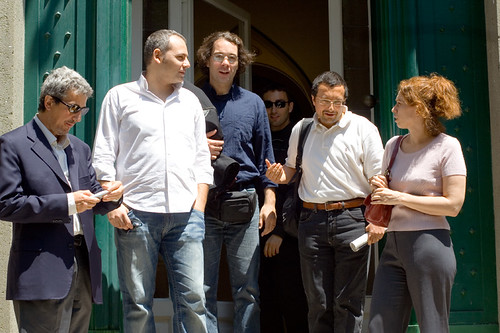
Italian bloggers meet Bruce Perens Italian bloggers meet Bruce Perens by Roldano De Persio

Here the list of bloggers at the event: Alessio Jacona (corporate blogging), Luca Sartoni (free software activist), Leo Sorge (journalist), Francesco Romeo, Massimiliano Mirra (developer), Tara Kelly (entrepreneur and designer), Roldano De Persio (marketing and photographer), Fabio Masetti (IT freelance), Andrea Martines (web accessibility expert), Nicola Mattina and myself.

Bruce gave a speech introducing himself and his job over the last twenty years, getting a chance to tell people about his relationship with his previous and actual employer, with his customers, but also about freedom and democracy.

Among non-open source topics covered, it is worth to mention the network neutrality and the importance of bloggers independence, and his invite to work hard to keep the Internet for everyone.

I wish to thank Bruce Perens, who kindly welcomed the idea to meet Italian bloggers, Ernst & Young who guested our informal meeting by its office in Rome and, last but not least, all participants that made it a reality.

I hope it to be the first meeting of a long series, and I agree with Roldano saying that in its simplicity it was a great thing: a get-together of bloggers, Internet citizens eager to know more and talk about a phenomenon that is changing our daily life.

[italian bloggers, open source, perens]

Open Source Links: 13-06-2007

Should I become an Industry Analyst? - James wisely observes that open source analysis has still to address some open issues to get more powerful, and he calls for action: I am here!

CMS Deployment Patterns - “Baking” vs “Frying” in the CMS arena, I hope Seth will keep posting on this subject telling us which Open Source CMS suites better for those scenarios.

Thoughts on the Ubuntu Mobile and Embedded Project - Alex talks about Ubuntu extending its brand into the unwired arena. Will it work, eventually?

US Patent Office to Try ‘Open Source’ Approach - Will you work for free (as in beer) to help patent examiners do their job? Apparently Microsoft, Red Hat, IBM, HP, CA, and General Electric are backing Professor Beth Simone Noveck.s efforts for the formation of a Community Patent Review project.

The Open Source Business Meme - Inspirational guidelines for open source firms: three to avoid, three to embrace, by Stephen o’grady.

Where do I download OpenSolaris”? - Good hints Simon from Ian Murdock, have a look!

Italian new tech startups - The Best Ecosystem for Technology Start-ups: the Italian Evidence

Researchers and policy makers agree on the fact that New Tech Based Firms (NTBF) play a fundamental role in modern industrialized economies. This is all the more true in Italy. On the one hand, in fact, due to the weakness of the national high tech industry, there is a great need for a complete generational renovation in the enterprise operating in this sector. On the other hand, the country presents many success stories of new enterprises operating the the medium and low tech content sectors. Therefore the question arises concerning the conditions necessary in Italy for the development of top level firms operating in high tech sectors.

In this context, the analysis produced by the RITA Observatory of the Department of Management Engineering of the Polytechnic of Milan (RITA Report 2005) showed that Italy boasts a vast number of young high tech enterprises that could be candidates to become “gazelles”.

KDE Resting Gazelle, by khosey1

These enterprises are concentrated in the stronger parts of the country, particularly in Lombardy (30.3%), while their presence is far rarer in the Southern Italy (15.4%). Moreover the productive specialization of these enterprises is influenced by the traditional vocations of Italian regions and the presence of large enterprises operating in related sectors. In particular two thirds of all NTBFs operate in the service sector (software, Internet services, TLC and desktop publishing). In the manufacturing sector, a fundamental role is played by ICT (21.6% of the total, 8% of which in electronic, optical and biomedical tools) and automation and robotics (19%). The share of NTBFs operating in biotechnologies, pharmaceuticals, chemicals and new materials is more modest (4.9%).

The birth rate of Italian NTBFs underwent a significant increase in the latter half of nineties. Nonetheless, after the pinnacle reached in 2000, their birth rate is decreasing with the important exception of start ups generated by the public research system.

This is due to the negative effects created by the new economy bubble and, more generally, to the unfavourable macro economic conditions that have recently affected a vast portion of the high technology sector. Nonetheless, the enterprises have survived this period of competitive selection are starting to exhibit a new vivacity, which is particularly visible in the increase of indications related to innovative activities such as patenting and participating in research projects financed by the European Union.

(source: “an eye to innovation” newsletter, by FILAS)

Reading the ICT market in 2006 report, edited by AITECH-Assinform - the Italian association of Information & Communication Technology companies - apparently the IT Services shows some (little) sign of recovery (+0.4%), but software development and maintenance and data processing are both experiencing a downturn (-0.7% and -2.3% respectively).

Also interesting to notice that apparently innovation by Italian business does not take place on a co-operative basis, as results from the fourth Community Innovation Survey, by EUROSTAT.

Co-operation with customers in innovation activities ranged from 4% in Spain to 41% in Finland, and I am wondering what about launching an Italian Cooperative Software Initiative?

Technorati Tags: startups, ecosystem, innovation, open source

Open Source Conference: Commercial Open Source conference

The first edition of the Festival of Innovation, held in Rome from the 7th of June to the 10th, yesterday guested the Commercial Open Source Software conference.

I introduced Bruce Perens saying that the expression Commercial Open Source is far from being an oxymoron, considering that commercial means either something oriented toward profit or pertaining to public trade or dealings.

Festival dell'Innovazione Festival dell’Innovazione

Bruce was scheduled to deliver the opening keynote speech, and despite he was almost voiceless because of many previous events, he brilliantly managed to introduce the audience to Commercial Open Source. He started giving some background information on his life and works, and then invited people to consider the economic Function of software. As a matter of fact only 30% of US programmers are working by software companies, so most of the companies involved with software development are not in the business of software manufacturing. In other words Enabling technology, in other words, in his opinion it is not the profit-center, but a cost-center.

There are two main forms of enabling, cost-center technology: differentiating, and non-differentiating. Differentiating technology is what makes your business more desirable to your customer than your competitor’s business. [..] So, for Amazon, the “recommendation” software is a business differentiator. Obviously, it would be a mistake to Open Source your business differentiators, because then your competitor’s business might use them to become as desirable to the customer as your own business. [..] Perhaps 90% of the software in any business is non-differentiating. Much of it is referred to as infrastructure, the base upon which differentiating technology is built.

On friday afternoon Bruce raised up the same topic by FIDAInform, the National Federation of the Associations of Information Management Professionals, where he had an argument with a member, a Microsoft employee. Their discussion, while not lacking of mutual criticism, was of great interest to the audience, and Bruce eventually reported the differences existing between the two different business models also on Saturday.

Generally the initial development is done by a single entity as in the in-house and contract development paradigm, and the software is released to the public as soon as it is useful to others, generally before it would be considered a finished product and thus much earlier than a retail product would be released. [..]

The cost and risk of developing the product is distributed among these developers, and any combination of them can carry on the project if others leave. Distribution of cost and risk begins as soon as the project is mature enough to build a community outside of its initial developer.

On a different line Gabriele Ruffatti, Engineering’s legal representative in the ObjectWeb Consortium and a member of the SpagoBI & Spago projects board, gave a speech describing a different approach. Engineering is a large Italian IT firm employing about 3700 people - consider that only 0.4% of Italian IT firms employ more than 500 people and about 97% employ less than 10 people - and the System Integration represents more than 50% of their business.

In his opinion a commercial open source product is:

a solution claiming to be open source, claiming to have a community supporting it, but offering closed add-ons for enterprise adoption with a proprietary approach to the market.

He also added that Engineering have chosen the LGPL license, somehow implying that double-licensing doesn’t make much business sense to them. Bruce, that was totally voiceless at that stage, was disagreeing writing comments on his laptop, since he believes that double-licensing makes sense.

On behalf of the Italian Consortium of FLOSS firms, Carlo Daffara spoke about the importance of Open Source Selection, bringing the experience of well known European project like COSPA - the Consortium for Open Source Software in the Public Administration - and OpenTTT.

Emanuela Giannetta - Sun Microsytem Italia - started her speech mentioning OpenSolaris and Java, to eventually tell the audience about two Italian initiatives. JOB, an Italian portal created by her boss Franco Roman, and JikiBloom, a platform sponsored by Sun Microsystems Italia integrating a number of opensource projects, like Asterisk, Hylafax, Jboss, Pentaho, SugarCRM, Zimbra and others.

Pierpaolo Boccadamo - Microsoft Italia - gave a speech talking about the importance of Intellectual Property in the digital age - and he got few questions from the public in this respect - and eventually told that Microsoft is going soon to open its second Port25 Lab - the Microsoft Open Source Software Lab - somewhere in Italy.

Last but not least Bruce spent few words talking about Software Patents and Open Standards.

People from the public posed some questions to the panelists, ranging from Interoperability to patents, and among them Davide Gorini, Director of the first Italian Open Source Incubator, based in Rome, asked Bruce about Open Source Government policies. Bruce stated that in his opinion the law shouldn’t oblige to use open source software, but it has to be mandatory its evaluation. As he clearly explained, Public Administrations should make their choices considering technical merits and also valuating the impact of Open Source paradigm itself.

Many Thanks to LAit - Lazio Technological Innovation - for the perfect organization and for the gorgeous location chosen for the event!

Technorati Tags: Perens, Rome, Open Source Conference, Jikibloom, Spago, CIRS

Open Source Links: 07-06-2007

Introducing Office Excel and PowerPoint Translators - M2 is available now, the post includes also the roadmap, published in .doc format!

Standalone open source software market reaches £900m - The standalone market was worth £900m last year, with further acceleration in take up expected this year, said analyst IDC.

Welcome to MTOS: the Movable Type Open Source Project - The Movable Type Open Source Project was announced in conjunction with the launch of the last beta. OpenLogic reports that many in the blogosphere have said that Six Apart has been forced to move to open source because its largest competitor is open source. I am among them, blog platforms basically are a SaaS business.

Anti-GPLv3 campaign has started - The latest draft of GPLv3 is out of the door, the anti-GPLv3 pieces start coming in, FSFE says.

Open Source Hiring - This is good time to be an open source developer, have a look at Considerati’s job opportunities!

Project Indiana: The Q&A - Stephen O’grady thinks Indiana is precisely the kind of change that’s needed to make OpenSolaris an option where it’s not today.

Open Source Hackers: the Italian blogosphere meets Bruce Perens!

The Italian blogosphere is invited to participate next Friday in a meeting with Bruce Perens, author of the Open Source Definition and well-known open source advocate.

Open Source awareness is risking to be a clique phenomenon, resulting in open source advocates talking each other. Bruce Perens kindly welcomed the idea to meet Italian influencers to the Open Source.

Bruce Perens Bruce Perens by GeorgeNemeth

Bruce Perens will introduce himself telling us about his life as hacker, and we might learn from his voice about all different phases of the open source adoption.

To join the meeting, scheduled for 10 a.m. (GMT+1) you just need to subscribe on pbwiki or upcoming setup by Nicola Mattina, who is helping me to make it happen.

On Saturday I will also moderate the Commercial Open Source Software panel where Bruce will held the keynote speech, if you are an IT entrepreneur that is the place for you!

Ernst & Young will guest our meeting by its office in Rome, Via dei Villini 13/15, many thanks to Andrea Paliani to make it possible.
[open source, perens]

Open Source Blogs: Commercial Open Source Software partners with OpenBusiness!

Christian Ahlert, project lead of Creative Commons England and Wales, few days ago kindly asked me to join OpenBusiness, a space aimed at sharing Open Business ideas built around openness, free services and free access.

I am glad to contribute to an online resource of innovative business models, and I am looking forward to share knowledge and lessons from the commercial open source world.

Join the club Join the club by WAXY

Technorati Tags: Commercial Open Source, Open Business


About Roberto

Roberto Galoppini on Open Source Software
I am a specialist in Commercial Open Source Software, consulting on marketing and business strategy. I help organizations to build new business strategies for the open source economy. I speak widely on open source and open standards throughout the world.