Recent Updates Page 85 Toggle Comment Threads | Keyboard Shortcuts

  • Roberto Galoppini 11:03 am on February 6, 2008 Permalink | Reply  

    European Open Source Projects: Qualipso Conference (part II) 

    The second day of The First International QualiPSo conference – “Boosting innovation and growth by fostering Open Source Software trust and quality” – I arrived just in time to attend the “Legal issues in OSS” debate, moderated by Stéphane Dalmas (INRIA).

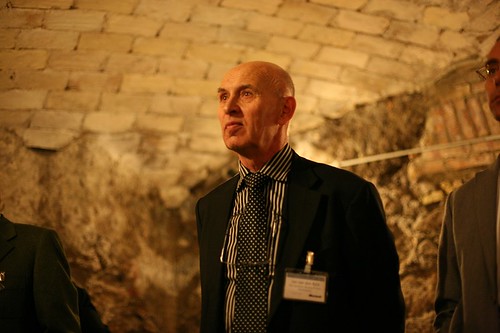
    A new beginning?The end or a new beginning? by kreativekell

    Stéphane insistently asked the panelists why Europe should accept what he called “US-centric FOSS licenses”, eventually ending to let the audience yawn at the second question on the same topic. I bring some statistics on the table, saying that roughly 75% percent of open source software, at least on SourceForge, is released under GPL/LGPL (of which about 65% under GPL), and I don’t see the point to create a (European) license when EU is definitely not a software house.

    I also asked Till Jaeger, of JBB Law in Germany and one of the driving forces behind the Institut für Rechtsfragen der Freien und Open Source Software, if the AGPL was going to take over in his opinion, at least among small European OS firms. Till represented FSFE in Germany and Harald Welte in GPL enforcement cases, and he said that among the local firms he is advicing AGPL is an emergent phenomenon.

    Last but not least Phil Robb introduced the audience to HP vision to setup methodologies, process and tools to manage licenses’ complexity.

    The following forum – “Business models and strategies” session – was moderated by Franz Kurdofer, Principal Consultant at Siemens, who opened the session saying that QualiPSo future work would be to recommend the best open source strategies depending on selected business models.

    Jean-Noel de Galzain, CEO of Wallix, started apologizing because, he said, he had to set up his presentation in the ten minutes he had before. His speech basically was about Wallix, a promising European OS firm I didn’t know before, but we lost the chance to hear from his voice a definitely much more interesting story.

    Diego Lo Giudice, Principal Consultant at Forrester, being the only analyst among the panelists was supposed to be the keynote speech of the session. His taxonomy of open source business models was basic [slide 19] (SaaS, Product Focused, Service Focused) and filled with inaccuracies, such as listing OpenLogic among SaaS-based firms or citing Funambol’s ten million downloads mark (a number I really wish Fabrizio to reach before doomsday!). He eventually closed his speech with a slide about real truth about the future beyond 5+ years, displaying only a big ‘?’.

    Do we have to think that Forrester analysts have no idea of what will be the possible evolution of the OSS market? This may explain why just a few years ago most of the consulting firms were convinced that OSS was a “flash in the pan” and would have never reached significant market share…

    Björn Lundell, chairman of the Open Source Sweden, a one-year old industrial Swedish Open Source Association, showed a slide [30] relating “commodification” of FOSS, ranging from not differentiating to differentating, to cooperation, from intra company to inter company.

    Cédric Thomas, CEO of the OW2 Consortium, talking about productized services said that the subscription is a healthy market, and that despite there is a lot of traction for SaaS he doesn’t see it replacing the dominant purchase and license mode.

    I asked the panelists about the Sun-MySQL deal, and I noticed that none of them spoke about open source business models, mentioning only specific aspects like licensing. The result was that the company’s strategy, or how a specific firm differentiates itself and deals with the competition, was not effectively described, neither understood.

    Jean-Pierre Laisné, Bull, formerly Chairman of the Board for the ObjectWeb Consortium, moderated the last forum “A network of OSS competence Centres“. He was the only one conducting the session proactively, posing interesting questions to the panelists and doing so eventually catching the audience attention.

    Petri Räsänen, President of COSS, one of the oldest European FOSS competence centers, stated:

    Are you trying to create a compentence center from scratch? It takes years!

    Petri said that the COSS is stimulating FOSS firms to work together with a common “vertical” goal, agreeing with me about the importance of avoiding horizontal aggregation of firms. In this respect I suggested Jean-Pierre to look deeper into the horizontal vs vertical debate, considering the lack of information about consortia and associations in QualiPSo’s deliverables.

    I asked Marco Fioretti, Linux Journal Editor, a comment about the conference:

    In several moments the conference sounded to me like some LinuxWorld show of 6/7 years ago; sure, OSS is a very smart business strategy both for producers and corporate users, but we already knew it and even Qualipso knows it. Personally, however, I have the feeling that Dana Blankenhorn is right when he says that this may be the best way to make EU officially accepts OSS as soon as possible. I’m not necessarily happy about it, of course…

    (Just to recall, Dana wrote “the insights aren’t that deep. They don’t seem to be much more than what you would get from an hour’s worth of Googling.”)

    Summarising:

    • Considering that QualiPSo aims at facilitating the reusability of the results of the project to let the QualiPSo competence centers able to deliver consultancy services on FOSS based business models, a better understanding of business models is a must;
    • Getting involved people from FOSS communities is also a must, especially to avoid self-referentiality. Talking about OSS and not presenting what self-sustaining communities (like Debian or KDE) are doing restrict the range of observed phenomenons (consider that half of the linux kernel is community-developed…)
      .
    • While it is encouraging to know that the Commission is investing quite a lot in OSS, it seems that smaller and more focused projects have obtained in the past (and are obtaining now) more “bang for the buck”.
      .
    • Up to now, most competence centers across EU have demonstrated little impact on the creation of a regional/national OSS market. What Qualipso is doing in improving the situation?
    • For your next conference, organize your roundtables so every panelist has the opportunity to show its true competences…

    Technorati Tags: commercial open source, qualipso, EC funded, StephanéDalmas, TillJaeger, PhilRobb, Jean-PierreLaisné, MarcoFioretti, Petri Räsänen, CédricTomas, FranzKurdofer, DiegoLoGiudice, Jean-Noel de Galzain, Björn Lundell, Open Source Sweden, COSS, INRIA

     
    • Davide 2:37 pm on December 4, 2008 Permalink

      Pay attention to the legal session…. Phil Robb did not attend the conference… probably you are speaking about Martin Michlmayr…

    • Roberto Galoppini 9:10 am on December 5, 2008 Permalink

      Hi Davide, nice hear from you.

      Both Phil and Martin attended the conference, and it was a great pleasure to speak with them about FOSSology and FOSSBazaar.

      Phil was indeed invited to join the panel, as clearly results from his own blog at FOSSBazaar.

      I suspect you didn’t attend the legal session yourself.. 😉

    • Martin Michlmayr 2:13 pm on December 9, 2008 Permalink

      Davide, this blog posting is about the QualiPSo conference in Rome earlier this year where Phil gave a presentation. It’s correct that he didn’t attend the recent event in Paris.

    • Roberto Galoppini 6:12 am on December 10, 2008 Permalink

      Hi Martin,

      if you think that the last QualiPSo conference raised interesting issues I’d be happy to write about it. Let me know.

      Ciao,

      Roberto

  • Roberto Galoppini 2:47 pm on February 5, 2008 Permalink | Reply  

    Microsoft Italy launches Mclips 

    Yesterday Microsoft announced Mclips, an open blog to discuss with Microsoft Italy employees about technology & lifestyle, job opportunities and Microsoft’s initiatives.

    Jan van den BeldJan van den Beld by Digital PR

    About 30-40 Microsoft’s employees will be involved in this communication project, as explained Carlo Rossanigo introducing the new blogging platform.

    Unfortunately we couldn’t play with Mclips during the event, but I happened to speak with Mario Derba, Microsoft Italy CEO, about the future of Microsoft’s distribution channel, as reported by my friend Andrea Genovese (7th floor Director).

    I told Pierpaolo Boccadamo, head of Microsoft’s Platform Strategy by the Italian subsidiary, that we are looking forward to see Microsoft opening the Italian Open Source Software Lab (a sort of Port25 Lab).

    Last but not least I am glad Microsoft invited Jan van den Beld, the Secretary General of Ecma International. I had a chance to speak with about standardization bodies, OpenXML and many other issues. More on this soon.

    Technorati Tags: Microsoft, Italian blogosphere, Italian bloggers, Mclips, CarloRossanigo, PierpaoloBoccadamo, MarioDerba, JanVanDenBeld

     
  • Roberto Galoppini 10:38 pm on February 3, 2008 Permalink | Reply  

    Microsoft Italy meets the Italian blogosphere 

    Microsoft Italy invited some Italian bloggers to talk about the present and the future of the IT market, (permanent) interoperability and open standards, technological and business trends, web 2.0 and software+services.

    It will be also a chance to talk about Microsoft’s products and strategies with Mario Derba, recently appointed Microsoft Italy CEO. I am looking forward to know if Paula Rooney is right being doubtful about Zimbra’s future.

    Follow me on twitter tomorrow, from 6 PM (GMT+1)!

    Technorati Tags: Microsoft, Open Source Strategy, Open Standards, MarioDerba, Italian blogosphere, Italian bloggers, PaulaRooney, Zimbra

     
  • Roberto Galoppini 6:52 am on February 2, 2008 Permalink | Reply  

    Linux on Desktop? European Organization represents EU OS firms, Open Positions: press, facts and figures 2-02-2008 

    Myself interviewed by Marco Trotta for “Il Manifesto” – Is finally the Linux on desktop year? I doubt, likely Linux in 2008 will take over in the mobile phone market though.

    EU: Organization to represent Open Source SMEs – If I am not wrong Rishab Gosh told me something about it.. meme to myself: send an email to Rishab now!

    FR: Government economic commission recommends Open Source – France should increase the use of Open Source software, says an economic commission headed by the French economist and policy adviser Jacques Attali.

    Attention Yahoos! – Ross suggests Yahoos to join Socialtext!

     
  • Roberto Galoppini 2:38 pm on February 1, 2008 Permalink | Reply  

    European Open Source Projects: Qualipso Conference (part I) 

    The First International QualiPSo conference – “Boosting innovation and growth by fostering Open Source Software trust and quality” – took place in Rome on the 16th and 17th of January, with international speakers from 30 different countries.

    beginningRemember how it all began.. by .bradi.

    IT executives from major players were joining industry round tables, and public officers and agencies presented their views, but there were no free software projects’ representatives, and only one open source vendor (François Bancilhon, take a moment to read his open letter to Steve Ballmer).

    Unfortunately I missed the chance to meet the Minister Luigi Nicolais, who opened the conference emphasizing the role that Open Source can play in the society development. I really would have liked to ask him about the 10 millions euro open source funds.

    Getting back to the conference, the first session I attended was “OSS in the world – implementing open source for innovation and growth: experiences and practices“. Diego Lo Giudice, Principal Consultant at Forrester, talked about future trends, basically telling things in the know: OSS becomes a major ingredient for “commercial software” – apparently he is missing that Commercial and Open Source are still not antonyms – substantially agreeing with Gartner; OSS puts downward pressure on “commercial software” license pricing, etc. The Forrester’s survey on open source usage in Enterprise and SMB in America and Europe was pretty interesting, though (slide 6-8 of his presentation).

    Alfonso Fuggetta gave the same speech he gave at the VON Europe Conference. He concluded that embedded software and pervasive ICT are a huge opportunity, blue oceans are appealing.

    Yuan Cheng, Deputy Director for Information Industry Bureau of Heilongjiang Province of China, talked about China’s long term evolution vision about open source, putting everything in a totally different temporal perspective (100 years!). He also said that he looks at QualiPSo as a good starting point, being a chance to broaden networking opportunity. In this respect I also believe QualiPSo is playing an important role in this respect, but this specific goal could be achieved without EU spending big bucks.

    Roberto Di Cosmo gave a great speech, explaining why the OS industry need engineers and developers able to cope with communities (soon more on his idea of resumes FOSS ready) and briefing the audience about the Groupe Thématique Logiciel Libre, a French pole de competitivite (competence center) funding FOSS projects. He ended his speech saying:

    FOSS is here now, let’s make sure it will scale up.

    Stefano De Panfilis – QualiPSo project coordinator and Research and Development Laboratory Director at Engineering Informatica – closed the first day talking about “Leveraging OSS“. He said that we should move from rebellion to industrialized practices, keeping the freshness and enthusiasm tradition of free software projects. I totally agree with the statement, and I am looking forward to see more contamination at the next meetings, maybe inviting selected speakers from different communities. (to be continued)

    Technorati Tags: Commercial Open Source, open business, oss, qualiPSo, RobertoDiCosmo, DiegoLoGiudice, AlfonsoFuggetta, YuanCheng, François Bancilhon, StefanoDePanfilis, System@tic, Forrester

     
  • Carlo Daffara 3:19 pm on January 31, 2008 Permalink | Reply  

    OpenTTT days at CeBIT 

    After a quite successful meeting in Rome, (where Roberto was so kind to join and help me) the OpenTTT project will be hosting a matching event within the CeBIT FutureMatch.

    meeting pointMeeting Point by Varf

    From the CeBIT website: “The EU project Open TTT is supporting enterprises in finding, applying and developing the right Open Source Software to fulfill their specific needs. By collaborating with Open TTT the IRC Future Match 2008 has expanded its breadth to include the Open Source Software sector and thus offers a mediation platform for innovative Open Source Software offers and requests.”

    In the past event, FutureMatch organized more than 1200 one-to-one meetings between companies, and it is my hope that a significant number of those in the next edition will be for open source services between OSS providers and end-users. I would like to invite any interested company willing to be there to register at the FutureMatch site; please choose “Open TTT” as “Assisting Organisation” during your registration to receive free entrance tickets for the CeBIT 2008.

    The OpenTTT project is evaluating a novel approach to help in the OSS adoption process, by “industrializing” the matching process between the demand for software with the necessary functionalities and the offer (the whole set of suitable OSS packages). The mediation process is designed to find the best selection of tools and projects that can best match the expressed needs, and then we try to create one-to-one (or many-to-one, when more than one company is interested in paying for modifications or updates) business exchanges between the potential customers and the OSS-based companies that provide support or services on the selected packages. This approach has been tested in several workshops, held in France, Germany, Italy and Bulgaria and will be refined with the results of the FutureMatch event; we plan to leverage our experience to create a standardized approach to OSS mediation, eventually creating a “blueprint” for competency centers based on the OpenTTT model. Maybe this may be the basis for improving existing marketplaces?

     
    • Roberto Galoppini 5:49 pm on February 3, 2008 Permalink

      I enjoyed joining the Italian OpenTTT workshop held in Rome on the 14 th of January, as I found appropriate and interesting Carlo’s speech on open source solutions for horizontal and vertical needs needs.

      Talking about the audience I was disappointed by the small number of attendees joining the conference, and I spoke about that with Martina Desole (APRE agency).

      Martina, who opened the conference talking about APRE’s role and presenting the participation of OpenTTT to Cebit FutureMatch, on the contrary was happy because with 17 attendees they reached the established target (namely at least 4 members for every vertical “club” among Energy&Environment, Industry Production, Transport and Public Administration).

      I don’t know how these targets are defined, but I believe that four participants for each vertical segment are not enough to drive conclusions out of mere assumptions. OpenTTT definitely needs a broader audience to verify and test its OSS mediation approach, let’s see if Cebit FutureMatch could help in this respect.

    • Carlo Daffara 8:46 am on February 4, 2008 Permalink

      The reason for Martina to be happy can be traced probably to the fact that for traditional matching processes 17 attendees can be considered a good participation 🙂
      The project has reached an overall of around 100 companies that were audited, submitted requests, and for which a match was found. In this sense, the number is sufficient to obtain some results, like the fact that there is limited difference in the horizontal requests (across company size and across different countries) and that we were able to match 95% of the requests directly with a single project.
      The biggest problem found is that in Italy (less so in Germany and France) the number of interested OSS companies was quite low, and most were not interested in participating in the matching process. I suspect that here we have a confirmation of Roberto (and mine) hypothesis that Italy has a strongly underdeveloped commercialization channel, and for this reason the market itself is still immature. I estimate that we are 2-3 years behind France in this respect, and probably 5 years away from a “well formed” market for OSS companies.

    • Roberto Galoppini 12:27 pm on February 4, 2008 Permalink

      Carlo I believe that the underdeveloped commercialization channel it is a partial answer, since covers only IT firms. In my opinion vertical needs are potentially interesting for a broader audience, resulting in the ideal match for projects like OpenTTT.

      In my understanding projects like OpenTTT would need an appropriate budget to promote its events, otherwise technical findings could end to be a tool for (few) geeks.

  • Roberto Galoppini 11:34 pm on January 30, 2008 Permalink | Reply  

    Italian Conferences: “What’s ahead in Security”, Whitfield Diffie 

    Tomorrow at the University of Rome, located in Via Salaria 113, Whitfield Diffie and Martin Hellman – famous for their invention of public key cryptography in cooperation with Ralph Merkle – will give a speech entitled “What’s ahead in Security”.

    The conference is organized by Sun Microsystems, Diffie is Chief Security Officer at Sun.

    Technorati Tags: Diffie Whitfield, Martin Hellman, public key cryptography, Sun

     
  • Egor Grebnev 1:12 pm on January 29, 2008 Permalink | Reply
    Tags: cognitive, cuneiform, ocr   

    Open Source OCR: Russian OCR engine to be published as FOSS 

    OCR is one of the few markets that are not fully internationalized yet. An OCR that can decently process Cyrillic texts for now can only come from Russia. And there are no more than two at the moment: ABBYY FineReader and Cognitive Cuneiform.

    Both trace their origins to the late Soviet-era government research projects that were commercialized in the nineties. However, Cuneiform started to lose its position in the consumer market by the end of the decade, then the application saw very little progress since 2000, and now it is generally unknown among end-users. Cognitive, who has by now shifted to systems integration market, has finally decided to open up Cuneiform, make it available as freeware immediately on a dedicated website and publish under an open source license in March, 2008.

    What makes it interesting is that Cuneiform will be the second OCR system to be published as Open Source after years of development inactivity along with Tessaract published by HP in 2005. Thus, the market of Open Source OCR will quite unexpectedly become competitive.

    The most probable idea behind the decisions of both Cognitive and HP is to put to work the unemployed resources so that they start producing at least minimal benefit. It looks like a simple ‘let’s see’ action, and no clear business model seems to be lying behind it.

    But with the recent increase of interest of the Russian authorities in Free Software usage at middle schools, the demand for the liberated Cuneiform could become considerable. However, until the government’s plan to shift all schools to Free Software by 2009 is fulfilled at least partially, it is very difficult to say what this state-supported middle-school FOSS market will look like and what its rules will be. But if it comes to reality, Cognitive has all chances to be a player there by simply having used the available resources in a smart way at the right moment.

    Technorati Tags: oss, ocr, Cognitive, ABBYY, Tessaract, Cuneiform, Russia, schools

     
    • Roberto Galoppini 10:14 pm on January 29, 2008 Permalink

      Ciao Egor,

      I just search for OCR on ohloh, an open source network – that just went open source – aimed at providing visibility into FOSS development. I think you might sign up and become a contributor, promoting Cognitive as soon as it will be released as open source.

    • Emily 5:05 pm on January 31, 2008 Permalink

      This is excellent news – I have no expertise in the Russian language and have been trying to do research on old propaganda posters in our library. Now I can try some digital translation tools on a few of the pamphelets I have around. Thanks so much for posting this!

    • Egor Grebnev 6:02 pm on January 31, 2008 Permalink

      Emily,

      Glad to know it was helpful for you!

    • Max 11:58 am on July 1, 2008 Permalink

      Very useful information for me. Thank you.

    • kfke 7:00 pm on July 30, 2008 Permalink

      please send me OCR

    • alex 8:39 pm on August 21, 2008 Permalink

      I’m translating a book from Russian to English I want build a tools to do this for me. After having scanned all pages I will run this tool and watch it work it’s magic. This is great info. Thank you.

  • Roberto Galoppini 8:54 am on January 29, 2008 Permalink | Reply  

    Open Source Government: Open Source and the Department of Defense, David Wheeler webinar 

    Open Source Software (OSS) and the DoD, a Webinar sponsored by DACS will be held by David Wheeler on the 2 of November at 3:00 PM – 4:30 PM EST.

    David WheelerDavid Wheeler by swhisher

    Open source software (OSS) has become widespread, but there are many misconceptions about it – resulting in numerous missed opportunities.
    This presentation will clarify what OSS is (and isn’t), rebut common misunderstandings about OSS, discuss the relationship of OSS and security, discuss how to find and evaluate OSS, and explain OSS licensing (including how to combine products and select a license).
    It will show why nearly all extant OSS is COTS software, and thus why it’s illegal (as well as foolish) to ignore OSS options.

    Title:Open Source Software (OSS) and the DoD
    Date: Monday, February 11, 2008
    Time: 3:00 PM – 4:30 PM EST

    System Requirements
    PC-based attendees
    Required: Windows® 2000, XP Home, XP Pro, 2003 Server, Vista

    Macintosh®-based attendees
    Required: Mac OS® X 10.3.9 (Panther®) or newer

    .. and what about Linux-based attendees? 😉

    Space is limited, Reserve your Webinar seat now!

    Technorati Tags: Open Source Government, DavidWheeler, dacs, webinar, open source procurement, open source governance

    (More …)

     
  • Roberto Galoppini 6:59 pm on January 28, 2008 Permalink | Reply  

    Open Source Tools: more on HP’s FOSSology anf FOSSBazar 

    The HP’s announcement of the availability of FOSSology, an open source tool to track and monitor the use of FOSS within an organization, and FOSSBazaar, a community platform to discuss best practices related to the governance of FOSS, is getting public attention.

    Martin Michlmayr, recently hired by HP to play the FOSSBazaar Community Manager, introduced me to Phil Robb – Engineering Section Manager in the Open Source and Linux Organization at HP – and I asked him more about the idea behind HP’s initiative.

    HP see’s a lot of fear uncertainty and doubt about FOSS from too many of the customers we work with – said him during a gorgeous dinner here in Rome – the FUD is not in the developers, it’s in the other folks in these companies who are responsible for the governance of the corporate software assets.

    The managers, legal team, procurement folks ,etc in HP have been working with FOSS a long time, and we are confident and comfortable with our use of FOSS and our support and participation in the community. We know there are other organizations like ours out there as well.

    It is obvious to us that if we help to build a “general consensus” across the corporate world as to how to manage FOSS, then many more organizations will also be confident and comfortable with their use of FOSS and therefore it’s adoption and usage will grow (along with the FOSS community in general). We think this is a good thing for both FOSS and the corporate community.

    If HP is recognized as a driving force behind this improved understanding of FOSS, then both the community and these corporate customers will look more favorably on HP, and our capabilities regarding FOSS than they have in the past. HP’s current reputation isn’t bad or negative, but it’s also not that well known. We want to improve that.

    Is HP going to kill Black Duck and or Palamida businesses? Both Black Duck and Palamida are welcoming the initiative, and I believe that HP is in the position to add momentum to the use of open source software without affecting their business.

    HP Open Source Health Check is a set of services HP is offering to its customers. Some of them are using the fixed-time fixed price formula, moving from the classical artisanship approach to an industrial way to deliver open source value. Others, like the Open Source Governance Assessment Service and the TCO Analysis Service, require a deep understanding of both closed and open source platforms in a variety of sectors, and sound pretty difficult to sell worldwide as a “productized service“.

    Matt Asay stressed the fact that HP is not creating a proprietary product, but going open source is probably the only way to get people’s attention in short time, and partnering with many important firms – like Google, Novell and SourceForge just to name a few -for co-authoring FLOSSBazar’s content it is definitely a smart move.

    Talking about FLOSSology, I am looking forward to see if now that Ohloh went open source it will eventually be included at same point. In the meantime I warmly suggest to insert either FLOSSology and FLOSSBazar on Savannah, considering that searching for Open Source Selection on google returns the Savannah’s entry for QSOS project as the very first result.

    Last but not least helping medium to large customers to understand if, within commercial Linux distributions in use by their systems, there are components and modules not supported by the vendor could be a plus.

    Am I right Phil?

    Technorati Tags: HP, FOSSology, FOSSBazar, Ohloh, open source selection, QSOS, Savannah, PhilRobb

    About Phil Robb.
    Phil Robb is Chairman, and General Manager of FOSSBazaar.org; a website and community dedicated to improving the governance and adoption of free and open source software within enterprises, institutions, and governments. Phil is also a section manager at Hewlett Packard leading their Open Source Programs Office. In that role Phil manages several product development teams focused on open source solutions and governance including the FOSSology project. Phil is also responsible for HP’s Open Source Review Board which is the governing body within HP for all open source software usage and deployment. Prior to joining HP in 2001, Phil held senior management and technical positions at Critical Path, Fisher Scientific, Motorola, and Honeywell-Bull. Phil received a Bachelor’s of Science degree in Management Information Systems from Bowling Green State University, and attended Colorado State University toward a Masters degree in Computer Science.

     
    • Ross Turk 8:31 pm on January 29, 2008 Permalink

      Hey Roberto! Thanks for writing about this story. Over here at SF.net, we’ve been talking with the FOSSology team for a while now, and we’re committed to helping them in any way we can. I’m actually looking forward to meeting them face-to-face during the upcoming season of trade shows to talk about our path forward.

      I think that the location of open source code in a large, heterogeneous codebase is of high importance to everyone involved. From my perspective, this isn’t necessarily proof that companies should fear open source technology, as Dana Blankenhorn suggests (http://tinyurl.com/2xu8q9). This doesn’t have to be seen as an intrusion detection system for wicked alien code.

      Instead, I think this should be seen as a tool that companies can use to be well-educated on the license requirements of any code they utilize, so they can respect them and act accordingly.

      I also think it’s more than a little bit cool that open source code is of such tremendous usefulness that engineers are consistently taking advantage of it to “get the job done”…so much so that it compels business owners to consider the various legal implications. I believe, as Phil does, that providing tools to help business owners better understand just how valuable open source code is to their business will be a good community investment.

      Thx,
      Ross

    • Roberto Galoppini 11:32 pm on January 29, 2008 Permalink

      Hi Ross,

      it is always a pleasure to receive your feedback!

      Dana is right saying that (medium to large) enterprises need their own internal network of engineers and programmers, but this can hardly be the first step. I see HP now offering services previously offered only by small open source firms, and that is good. The FOSS market need more momentum, and HP can greatly help the process, changing open source perception by large customers.

      As I wrote I see also some space to offer value added services, license compliance it is just one of them.

c
Compose new post
j
Next post/Next comment
k
Previous post/Previous comment
r
Reply
e
Edit
o
Show/Hide comments
t
Go to top
l
Go to login
h
Show/Hide help
shift + esc
Cancel